
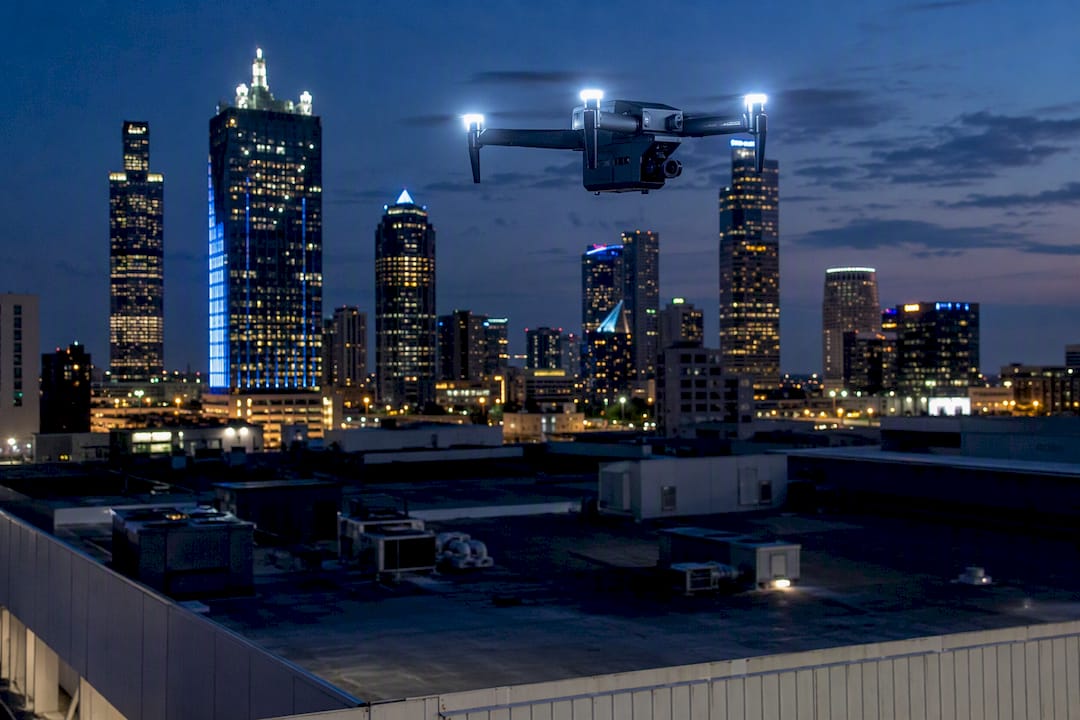
Drone Night Waiver: When Part 107 Requires One
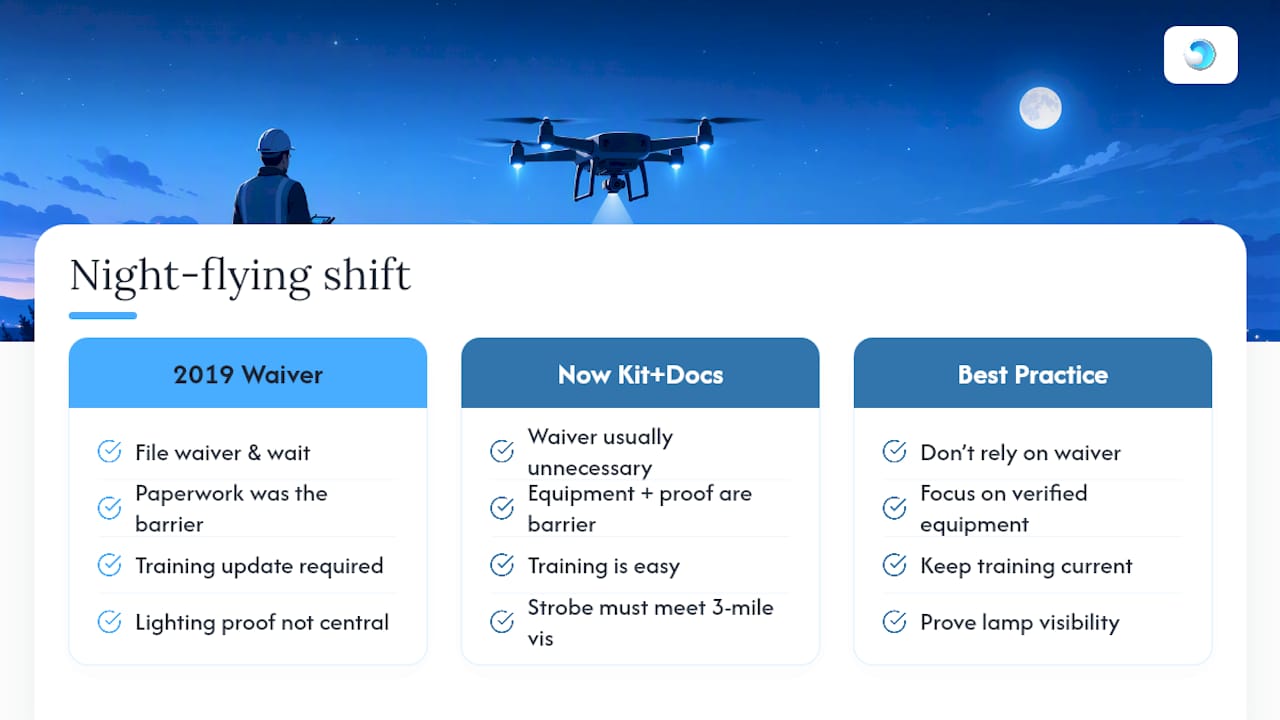
The majority of Part 107 flights conducted at nighttime do NOT require a drone night waiver. Per 14 CFR §107.29, provided that the remote pilot in command has passed the applicable post-April 6, 2021 knowledge test or training, and provided that the aircraft employs anti-collision lighting that is visible for at least 3 statute miles and has a flash rate adequate to avoid a collision, a nighttime waiver is only applicable when the operation you plan to fly cannot adhere to the lighting requirement.
The short answer for a nighttime production
If your shoot can incorporate the anti-collision lighting specified in §107.29 and your remote pilot satisfies the training clause in that rule, then obtaining a night-operations waiver is most likely not the reason for your flight not being approved. There will still be the remainder of your mission to review prior to giving the go-ahead on your project, including the site, airspace, ops limitations, aircraft and crew plan.
Operating without the required anti-collision lighting is a limitation that should be solved before locking in the schedule. The FAA identifies operation of small unmanned aircraft at night, or during civil twilight, without anti-collision lighting as an example of a circumstance where you may request a Part 107 waiver.
What §107.29 requires for night and civil-twilight flights
Section 107.29 contains night-specific operational conditions as well as civil-twilight operations conditions. As to night: (1) the remote PIC must have completed the appropriate initial knowledge test or training after April 6, 2021; and (2) the small UAS must be equipped with and use lighted anti-collision lighting visible for at least 3 statute miles that flashes at a rate sufficient to avoid a collision.
As to civil twilight operations, §107.29 also requires lighted anti-collision lighting that meets the visibility and flash-rate standards. But civil twilight is defined separately for outside Alaska (the 30 minutes before official sunrise and the 30 minutes after official sunset) and Alaska.
Training condition and certificate recency are related, but different
The night-operation language in §107.29 specifically refers to the initial knowledge test or training completed after April 6, 2021. §107.65 separately requires the remote PIC to have met aeronautical-knowledge currency requirements within the last 24 calendar months of exercising those privileges. Double-check both instead of assuming the currency is valid based on the certificate's issue date.
When a drone night waiver is needed
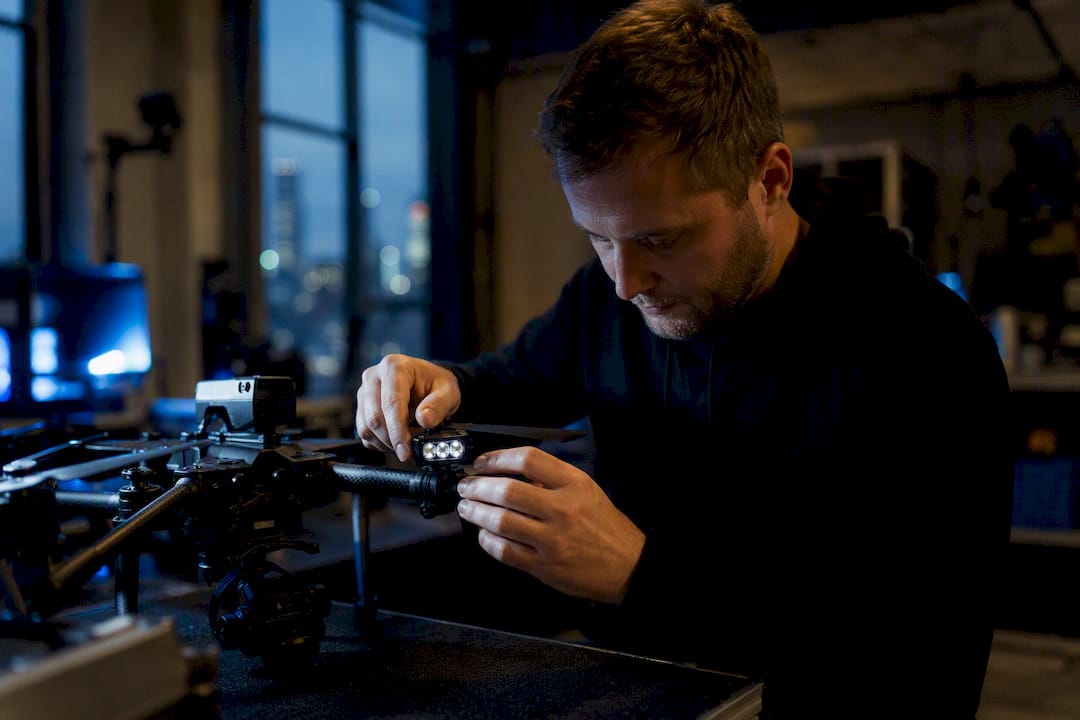
Apply for a Part 107 waiver when your mission can't otherwise satisfy §107.29's anti-collision-lighting requirements. For a production team, this can become an issue if the proposed visual treatment can't accommodate the required lighting. A waiver is the FAA's permission for you to operate outside a specific Part 107 limitation. When you submit a request, you must demonstrate that your operation can be safely conducted by alternative means.
When writing your waiver application, the FAA's current guidance says to describe the operation, identify the risks, and explain how you will mitigate those risks. The FAA can request additional information depending on the operation's complexity. While the FAA tries to approve or deny requests within 90 days of submission, some take longer depending on the complexity of the request and whether you provide all necessary information.
Keep the request matched to the actual constraint
When you receive approval, it's only for the limitation you waived. In this example, that's the lighting provision. If you are also flying in another way that violates Part 107, identify that limitation separately. The FAA's waiver guidance includes a list of Part 107 provisions that can be waived along with information needed to evaluate the request.
A practical sequence for marketing and production teams
Brief pilots during pre-production. Creative treatment, location, and schedule may still be flexible at this phase, so present the remote pilot with enough information to brief and allow time to determine if the flight mission will operate under the rule or if an FAA submission is required.
- Provide shot details. Specify the intended time window, location, altitude, flight route, subjects, and whether aircraft lighting requirements can remain illuminated.
- Have the remote pilot determine if the mission can be flown under Part 107. Operating with night lighting is only one piece of the operational puzzle. Don't use a waiver, certificate, or airspace authorization as a "get out of jail free card."
- Research airspace well in advance. The airspace in which you'll fly may require an FAA airspace authorization even if you meet the §107.29 requirements.
- Budget time to submit a waiver if necessary. The FAA tries to review waiver requests within 90 days, so build that into your production schedule. Also allow time for FAA requests for more information.
- Get it in writing. The pilot in command is ultimately responsible for every flight decision, so the production brief should provide that person with the definitive schedule and creative restrictions to determine if the mission can proceed.
Airspace authorization is separate from night compliance
Meeting §107.29 also does not eliminate the need for airspace authorization. The FAA states that airspace authorization still applies to controlled airspace under 400 feet for night ops. LAANC, or Low Altitude Authorization and Notification Capability, helps automate applications/approvals for requests that are eligible within controlled airspace. It provides airspace authorizations only. Drone pilots are still responsible for knowing and adhering to any applicable restrictions, checking NOTAMs, weather, airspace conditions, etc.
A clean solution for production coordinators is to manage night-operation compliance and airspace approval through separate workflows. If operating near airports or within controlled airspace, do not let having a night waiver satisfy the airspace requirement.
Frequently asked questions
Do I need a drone night waiver if I meet §107.29?
Generally, no. Routine Part 107 flight does not require a waiver at night provided it meets applicable training and anti-collision-lighting requirements of §107.29. Other Part 107 rules still apply, including airspace restrictions.
What lighting does §107.29 require?
Small UAS must be equipped with lighted anti-collision lighting that is visible for at least 3 statute miles and have a flash rate that allows a person to determine the drone is there to avoid collision. The RPIC may reduce intensity for safety reasons, but should not extinguish anti-collision lighting.
Can I fly during civil twilight without a waiver?
Section 107.29 allows pilots to operate during civil twilight if the aircraft is equipped with anti-collision lighting described in §107.29. Civil twilight, outside Alaska, begins 30 minutes before official sunrise and ends 30 minutes after official sunset. Alaska has its own regulatory definition of civil twilight.
Does a night waiver allow flight in controlled airspace?
No. A night waiver does not negate the need for airspace authorization. The FAA specifically identifies LAANC as an outlet for requesting eligible controlled airspace authorization, and its airspace authorization through LAANC guidance clearly says it provides airspace authorizations only.